
Introduction
When working with family members, cognitive medical practitioners can find it highly challenging to identify the root cause of family disputes without using a genogram. A three-generational genogram is essential as it enables one to acquire helpful insights into a family’s limitations, including disputes, and strengths, such as positive relationships (Twenge, 2023). The Reyes and Wolter family (names changed) is a blended family comprising Emily, her husband, Felipe, and their children, Cass and Sam, from Emily’s earlier marriage to Ken Wolter.
By delving into the personal viewpoints and roles within the family, it becomes evident that each member plays a specific part in shaping the family dynamics and influencing the relationships between them. The complex family relationships, varying parenting styles, and generational gaps within Reyes and Wolter’s family present challenges in sustaining harmonious relationships, requiring each person to embrace effective communication, thus fostering the well-being of all individuals.
Each Member’s Relationship to the Family and Their Roles
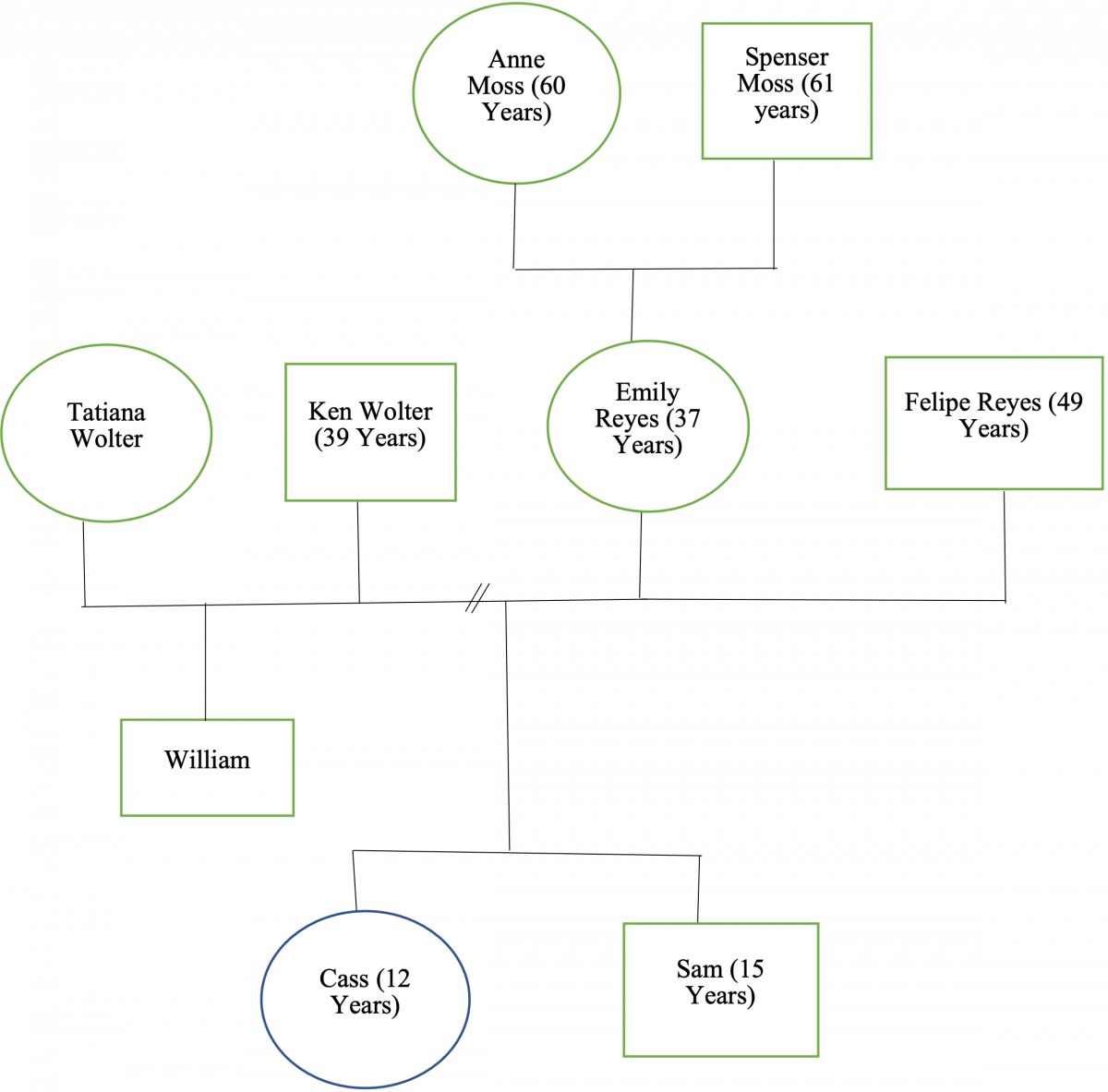
Figure 1 illustrates Wolter and Reyes’s family genogram, where the relationships are represented by the lines connecting family members. The genogram provides individuals with insights into various aspects of a family’s history, including family dynamics and struggles, such as divorce (Twenge, 2023).
Anne Moss is the wife of Spencer Moss, mother to Emily, and grandmother to Sam and Cass. Anne Moss has a close bond with her grandchildren and provides significant support to Reyes’s family. On the other hand, Spencer Moss is Anne’s husband, father to Emily, and Sam and Cass’s grandfather. Spencer Moss is actively involved in the lives of Felipe, Emily, and their grandchildren, visiting them without notice, offering emotional support, and resolving disputes.
Moreover, Ken Wolter is Emily’s ex-husband and the biological father of Cass and Sam. He is married to Tatiana and has a three-year-old son named William with her. Ken Wolter’s mandate in the family entails serving as a co-parent to Cass and Sam, who spend their summers with him. He works as a project manager, which restricts his involvement in the day-to-day parenting of his older children.
Furthermore, Emily is a paralegal and the mother of Sam and Cass. She attempts to comprehend and empathize with her children’s daily encounters and emotions (Umberson & Thomeer, 2020). Emily values her relationship with Felipe, her current husband, and anticipates having a functional blended family. Emily serves as the primary caregiver for Sam and Cass, even though she faces the challenge of disciplining them, prompting her to depend on her parents for support.
On the other hand, Felipe is Emily’s husband and the stepfather of Cass and Sam. Despite working as a delivery person, Felipe is a dedicated Catholic. Felipe desires a highly authoritative role in the family, which is identical to his upbringing, but feels limited since he is not the biological father of Cass and Sam (Umberson & Thomeer, 2020). Felipe’s relationship with Sam appears strained, resulting in consistent arguments in the household. He struggles to understand Sam’s conduct and feels frustrated by Emily’s permissive parenting style. Tatiana is Ken’s current spouse and William’s mother, and her role in the family involves assisting his husband in co-parenting Sam and Cass, mainly during the summer.
Notably, Sam is Ken and Emily’s biological son and stepson of Felipe. He is a high school sophomore struggling with academics and disinterested in extracurricular tasks. Sam’s relationship with Sam is tense, as he resents Felipe’s attempts to discipline him. Sam prefers spending summers in Madison with his father, where he feels more engaged with his colleagues and peers (Puhlman et al., 2023).
Cass is Emily and Ken’s biological daughter and Felipe’s stepdaughter. Cass, a 7th-grader, has been performing poorly academically despite being actively involved in church youth and Girl Scouts groups. She strives for harmony in the family and attempts to diffuse nervous tensions via humor, and Cass enjoys spending time with her grandparents, Spencer and Anne.
Comparison of the Generations
In the given case, the generations exhibit differences and similarities in their perspectives on cultural perceptions and values. One of the notable similarities involves having a shared Catholic background, where Felipe and Emily have some connection to the Catholic faith, even though Emily does not consistently attend church. The similarity in religious upbringing influences their comprehension of moral values and principles, including disciplining their children, Sam and Cass, to live according to established religious norms (Puhlman et al., 2023).
Nevertheless, differences emerge in Emily and Felipe’s attitudes toward discipline and parenting. Felipe grew up with a traditional view of the father as the disciplinarian and believes in authoritarian parenting. He feels frustrated that he cannot exert a similar discipline level over Sam and Cass as their biological father. Emily embraces a permissive and lenient parenting approach, emphasizing comprehending and showing compassion for her children’s behavior.
Another difference lies in family members’ perspectives on technology and leisure activities. Sam, representing the younger generation, has highly speculated in video games, which results in massive conflicts and arguments between him and Felipe. Felipe struggles to understand Sam’s preferences and perceives them as a waste of time, which contrasts with Sam’s desire for independence.
Emily, Cass, and Sam represent a more modern perspective transformed by their experiences in Des Moines. They have been exposed to different cultures and are highly open-minded (Puhlman et al., 2023). Although Emily identifies as a Catholic practitioner, she rarely attends church, indicating a more flexible religious practice. Cass and Sam grew up in a multicultural society, and their beliefs and values were impacted by their peers and experiences outside the family.
Felipe represents a highly traditional viewpoint rooted in his Puerto Rican background. Felipe’s cultural upbringing and his father’s authority influence his parenting perception. The involvement of Spencer and Anne, Emily’s parents, pinpoints another difference in generational dynamics. They visit Emily and Felipe’s family consistently and engage with their grandchildren, potentially reflecting a more indulgent parenting approach than Felipe’s stricter view.
How Generational and Cultural Discrepancies Affect Family Communication
Generational and cultural variation substantially affect how the Reyes and Wolter family communicates. Being from Puerto Rico, Felipe has grown up with traditional gender roles and a highly authoritative parenting style. He believes in strict discipline and anticipates Sam will follow his lead. Nonetheless, Sam, who belongs to Generation Z, resents Felipe’s attempts to fill his father’s role and rejects his authority. Sam’s resistance stems from his biological father, Ken Wolter, and a desire to maintain his individuality and freedom (Puhlman et al., 2023).
On the other hand, Emily takes a more permissive parenting approach and empathizes with Sam’s struggles, including his consistent confrontations with Felipe. Emily seeks to connect with Sam emotionally and values his wellness over strict discipline. The contrast in parenting approaches creates negative communication and misunderstandings between Felipe and Emily, as they have varied approaches and expectations for parenting.
Furthermore, cultural and generational discrepancies impact family members’ communication, resulting from family dynamics. Felipe’s parents, who are from Puerto Rico, seem highly uncomfortable with Emily’s family and have restricted interaction and declined conveyance. The traditional barrier adds to the strain between Felipe and Emily, as Felipe feels incompetent in supporting his parents’ or wife’s parenting decisions (Umberson & Thomeer, 2020).
Moreover, the involvement of Emily’s guardians, Spencer and Anne, in the family’s daily life complicates matters and increases disputes. Anne and Spencer spoil Cass and Sam, allowing them to do as they please, including playing video games. The inconsistency and differing anticipations further contribute to the communication challenges within the family, where Emily disagrees with Felipe, who punishes her children. Cass, Sam’s younger sibling, attempts to mediate conflicts and bring peace to Felipe Reyes’s household. She demonstrates a highly adaptive and flexible communication style, seeking to make everyone express her opinions freely, even though she experiences fear and anxiety when arguments escalate between Felipe and Sam.
Impact of Life Stages on Family Members’ Viewpoints
The Reyes and Wolter family members’ respective life stages influence their perspectives. Felipe, the stepfather in his late adulthood stage, and aged 49, has a more traditional view of family dynamics, impacted by his upbringing. He believes in a strict disciplinary approach grounded in his father’s mandate as the head of the household. Nevertheless, his viewpoint is challenged since he is not the biological father of Sam and Cass and feels restricted in his capability to discipline them. The measure creates tension between him and Emily, who implements a more lenient parenting methodology due to the children’s past experiences with divorce.
Moreover, Sam, aged 15 and at his school age, is navigating the challenges of adolescence while grappling with his family structure changes (Puhlman et al., 2023). He resents Felipe’s attempt to assume a paternal role and rejects his authority. Even though Sam anticipates having family stability, he struggles with the conflicting dynamics between his parents and stepfather. Sam seeks solace in his virtual world by playing video games, thus exacerbating the divide between him and Felipe.
In her middle adulthood, Emily is a mother and primary caregiver with a different perspective regarding balancing her role as a parent and understanding the complexities of blended family dynamics. Emily, aged 39, acknowledges Sam’s difficulties and comprehends the need for patience and empathy. She is torn between Felipe’s desire for authoritative discipline and her instinct to safeguard her children from further upheaval after divorcing Ken Wolter.
Emily hopes for a better relationship between Sam and Felipe, recognizing the essentiality of their family bonding and interaction (Fingerman et al., 2020). On the other hand, Cass, who is in her early childhood stage and aged 12, desires harmony and wants to have a healthy relationship among all family members. She empathizes with her mother’s obstacles and tries to diffuse disputes through humor. Cass seeks refuge in support of her grandparents, Anne, aged 60, and Spencer, aged 61, who offer stability and a secure haven during turbulent family times. The family members’ perspectives are shaped by their unique life stages.
Conclusion
The genogram provides an understanding of a family’s history, highlighting dynamics and challenges such as divorce. Felipe adheres to a strict disciplinary style, influenced by his father’s authority as the household head. He finds it challenging to comprehend Sam’s behavior and is frustrated by Emily’s lenient approach to parenting. These differing parenting styles lead to poor communication and frequent misunderstandings within the family.
References
Fingerman, K. L., Huo, M., & Birditt, K. S. (2020). A decade of research on intergenerational ties: Technological, economic, political, and demographic changes. Journal of Marriage and Family, 82(1), 383-403. Web.
Puhlman, D., Shigeto, A., Murillo‐Borjas, G. A., Maurya, R. K., & Vincenti, V. B. (2023). Qualitative genogram analysis: A methodology for theorizing family dynamics. Journal of Family Theory & Review, 25(3), 26-45. Web.
Twenge, J. M. (2023). Generations: The real differences between gen Z, millennials, gen X, boomers, and silents—and what they mean for America’s future. Simon and Schuster.
Umberson, D., & Thomeer, M. B. (2020). Family matters: Research on family ties and health, 2010 to 2020. Journal of Marriage and Family, 82(1), 404-419. Web.